رِحلة · journey

The Social Atlas of Human Discovery

Rihla turns the places history happened into somewhere you can stand. Choose a monument, walk to it, and the story it holds opens on your phone — unlocked by where you actually are, not by a tap.

Free. No account needed. English and Arabic throughout.

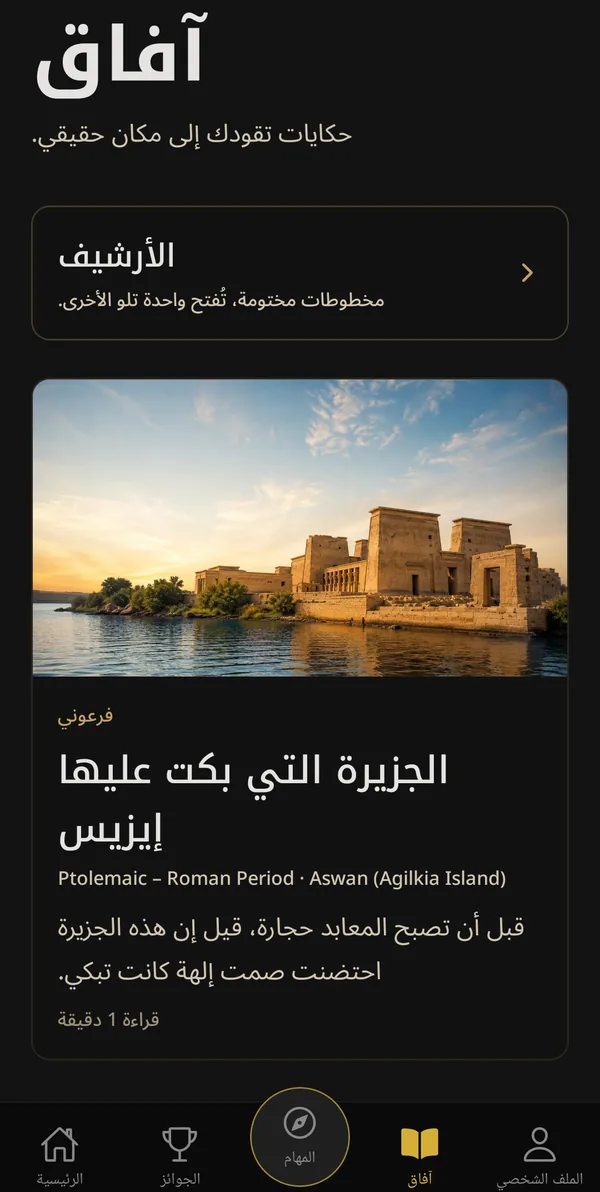
The Horizons screen in Rihla, showing a story about the temple island of Philae above a photograph of the temple at sunrise

Horizons — stories that lead somewhere real.

An atlas you walk into

Four things Rihla does, and nothing it does not. There is no feed, no follower count, and nothing to buy — the only ads are short rewarded ones you choose to watch.

Discover places

A catalogue, not a feed

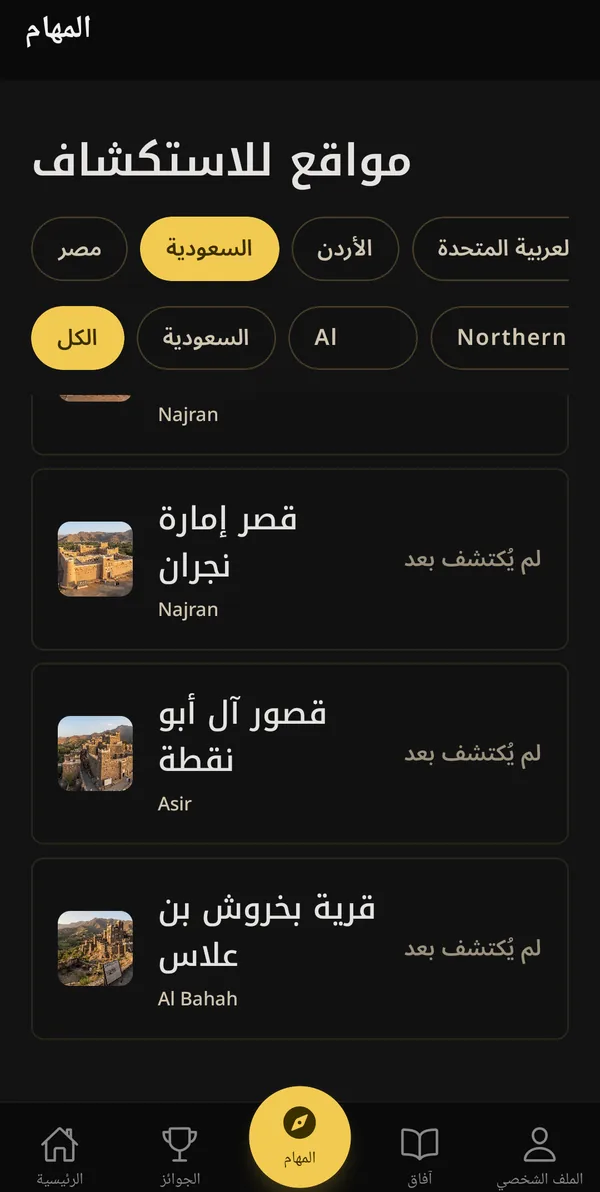
Temples, tombs, mosques, forts, palaces and museums — each one placed on the map, dated, and filed under the era it belongs to. Filter by country and by region, and see at a glance what is still undiscovered near you.

Stories & history

Three layers to every place

The record, as historians have it. What the people who live there remember, shared as told. And a short passage written to be read while you are standing in front of the thing itself. Longer readings live in Horizons; the sealed ones live in the Archive.

Track your journey

Standing there is the unlock

Rihla checks your position once, on your device, and compares it with the site. Close enough, and the place opens and joins your Explorer Passport — discoveries, cities, regions, and a rank that grows with the catalogue you have actually seen.

Explore more of the world

Egypt is the first atlas, not the last

Countries arrive as downloadable packs, so the app stays small and works offline once a pack is on your phone. New places are content, not a new release — the atlas grows without waiting on an app update.
What is in the app today

  • 102 places in Egypt
  • 16 governorates
  • 11 historical eras
  • 2 languages, everywhere

Every place is written in both English and Arabic — the same catalogue, not a partial translation.

How a discovery works

Three steps, and the third one only happens outdoors.

  1. Choose a place

    Browse by country and region, or open one of the guided journeys that string nearby stops into a single walk.

  2. Go there

    Rihla shows how far you are. When you arrive, one location reading is taken and compared with the site on your own device — your coordinates are never sent anywhere.

  3. The story opens

    The place is added to your passport, the trophy for it unlocks, and the full three-layer story becomes yours to read, on site or later.

Inside Rihla

The app as it ships — dark, quiet, and built to be read.

The Horizons reading list, showing a featured story about Philae with its era, city and reading time
Horizons Long-form readings, each one anchored to a place you can go and see.
The site catalogue filtered to Saudi Arabia, listing forts and heritage villages with their regions and discovery state
Sites to explore The catalogue, filtered by country and then by region.

Screens captured from the Arabic edition of the app.

Built to know as little as possible

You can use Rihla without an account, and most people do. Your progress lives on your device and is never uploaded — not even to an account. Location is used for one thing: checking, on your phone, that you are near the site you are verifying. Your coordinates are never transmitted; the app keeps your last few visits locally, so it can tell a real walk from a faked one.

Read the privacy policy

Start with one place

Pick something you have walked past a hundred times. Rihla is most itself when the monument is ordinary and the story is not.